
Best power banks for camping are the ones that match how you actually camp: how many devices you bring, how many nights you’re out, and whether you can top up from a car or solar panel.
If you’ve ever watched a phone die right when you need GPS or weather updates, you already know why this choice matters. In the outdoors, a power bank is less “nice-to-have” and more “keep the trip on track.”
This guide focuses on practical selection, not hype: the capacities that make sense, which features are worth paying for, and how to avoid buying a brick that under-delivers in cold weather or can’t charge your laptop.
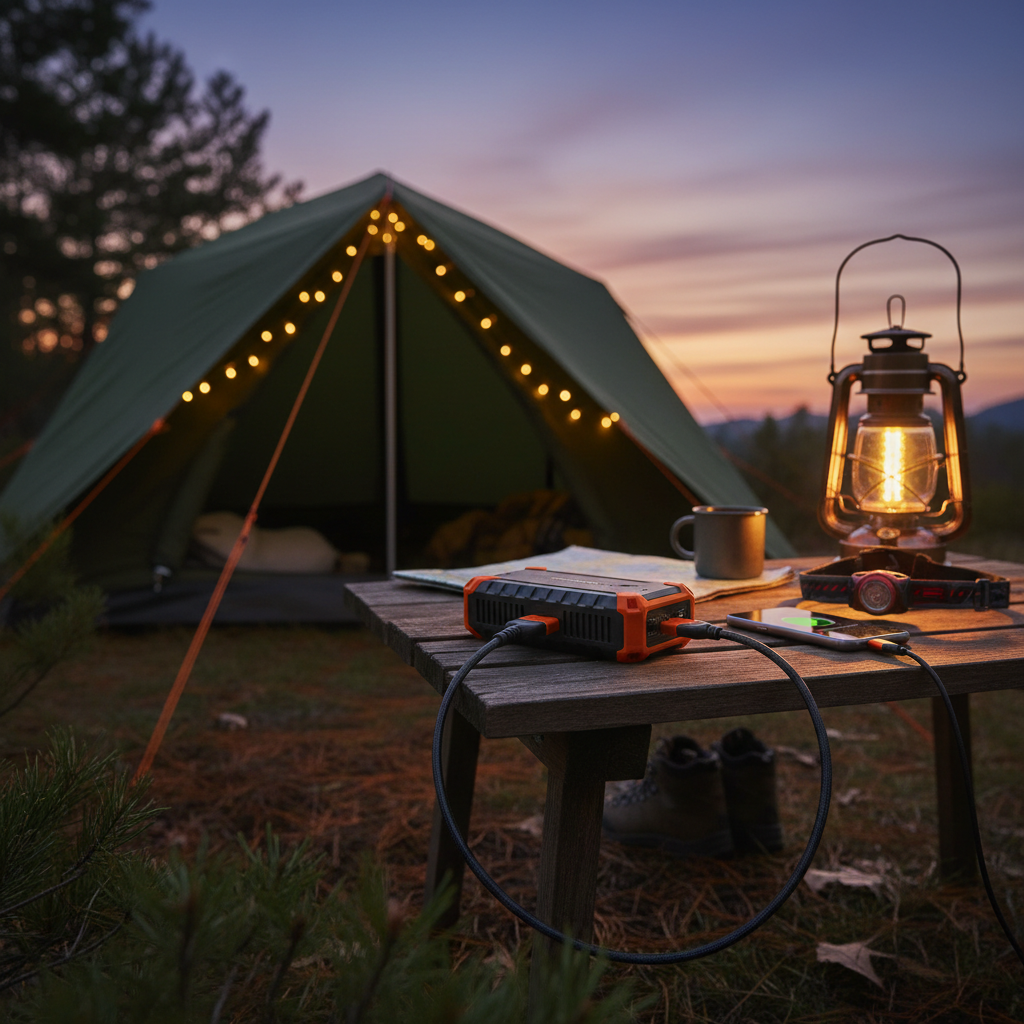
What “best” means for camping (it’s not just mAh)
Capacity gets the spotlight, but camping performance comes down to a short list of real-world factors.
- Usable capacity (not the number on the box): power conversion losses mean you rarely get 100% of rated mAh as phone charges.
- Output power (watts): a laptop-friendly bank needs USB-C Power Delivery, often 45W to 100W, while phones need far less.
- Port mix: one USB-C plus one or two USB-A ports covers most kits, but two USB-C ports can be a game-changer for couples or laptop + phone.
- Durability: textured casing, protected ports, and a build that survives drops matter more outside.
- Cold-weather behavior: lithium batteries can lose effective output in low temps, so planning margin helps.
According to NOAA, weather conditions can change quickly in many outdoor areas, which is exactly why keeping phones and emergency devices powered tends to be a safety choice, not just convenience.
Quick self-check: which camping profile are you?
Before comparing models, figure out which “power profile” fits your trips, because the best power banks for camping look different for a weekend at a campground versus dispersed backcountry travel.
1) Weekend car camping
- Usually easy to recharge from a car outlet
- Priorities: multiple ports, fast charging, decent size acceptable
2) Backpacking or minimalist overnights
- Weight matters, recharge options limited
- Priorities: 10,000–20,000 mAh range, efficient USB-C, good low-load performance
3) Multi-day off-grid (family, vanlife, basecamp)
- Lots of devices, more nights, maybe solar input
- Priorities: 20,000–30,000 mAh, high watt USB-C PD, pass-through charging if well-implemented
If you’re unsure, err toward more output power (USB-C PD) rather than only more capacity, because a huge bank that can’t charge your key device quickly can feel useless at the wrong moment.
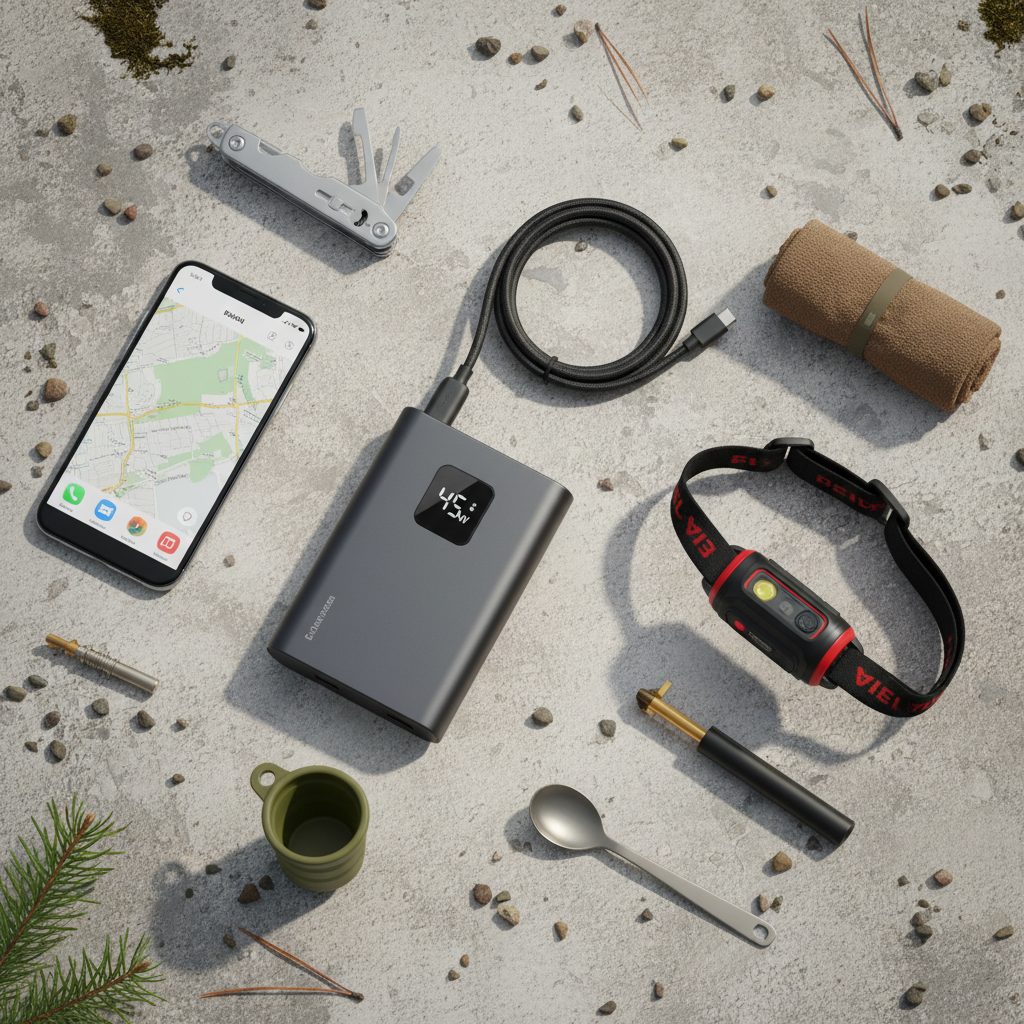
Key specs that actually matter outdoors
Here’s what I’d look at first, because these specs map directly to camping outcomes.
Capacity: a realistic range
- 10,000 mAh: lighter, good for 1–2 phones plus a headlamp over a short trip
- 20,000 mAh: the sweet spot for many campers, enough cushion for cold nights and heavier use
- 25,000–30,000 mAh: better for groups, tablets, or longer trips, but heavier and often slower to recharge
USB-C Power Delivery (PD) and wattage
- 18W–30W PD: solid for phones and some tablets
- 45W PD: can handle many ultrabooks and faster tablet charging
- 65W–100W PD: useful if you rely on a laptop, but check cable rating too
Recharge speed (input)
A common camping mistake is buying a big battery that takes forever to refill. Look for USB-C input with PD, so you can top up faster from a wall charger before you leave, or from a car charger.
Safety and protection
Most reputable banks include protections for over-current and overheating, but outdoor use adds heat in sun exposure and cold at night. If you expect temperature extremes, build in buffer capacity and keep the pack insulated in your bag at night.
Comparison table: match the “type” to your trip
This table keeps it brand-agnostic on purpose, because availability and model quality shift often. Use it to narrow your category, then shop within it.
| Use case | Recommended capacity | Recommended output | What to prioritize | Common downside |
|---|---|---|---|---|
| Backpacking overnight | 10,000–15,000 mAh | 20W–30W USB-C PD | Weight, efficiency, 1–2 ports | Less buffer in cold weather |
| Weekend camping (2–3 nights) | 20,000 mAh | 30W–45W USB-C PD | Fast recharge, multiple ports | Heavier pocket carry |
| Family/basecamp | 25,000–30,000 mAh | 45W–100W USB-C PD | Two USB-C ports, durability | Longer recharge time, bulk |
| Phone + camera action setup | 20,000 mAh | 30W–65W USB-C PD | Stable output, port variety | Cable/adapter juggling |
Practical recommendations: what to buy (without naming a “one-size” winner)
When people search for the best power banks for camping, they usually want a quick shortlist. Here are the configurations that tend to work in real kits.
Option A: “Most campers” pick (balanced)
- 20,000 mAh
- USB-C PD at 30W–45W
- At least 1× USB-C + 1× USB-A
- Battery indicator that’s easy to read (percentage is nicer than four dots)
This is the least regrettable setup for weekend camping, because it handles modern phones well and still makes sense if you upgrade devices.
Option B: Ultralight-ish backpacking pick
- 10,000–15,000 mAh
- USB-C PD around 20W–30W
- Minimal ports, minimal weight
People get tripped up here by underestimating cold and navigation use. If you rely on your phone for maps, consider the higher end of this range.
Option C: Laptop-capable camp power
- 25,000–30,000 mAh (check airline rules if you fly)
- USB-C PD 65W (or higher if your laptop needs it)
- Quality USB-C cable rated for the wattage
For remote work or photo/video workflows, watts matter as much as capacity. A huge bank with weak USB-C output won’t keep up.
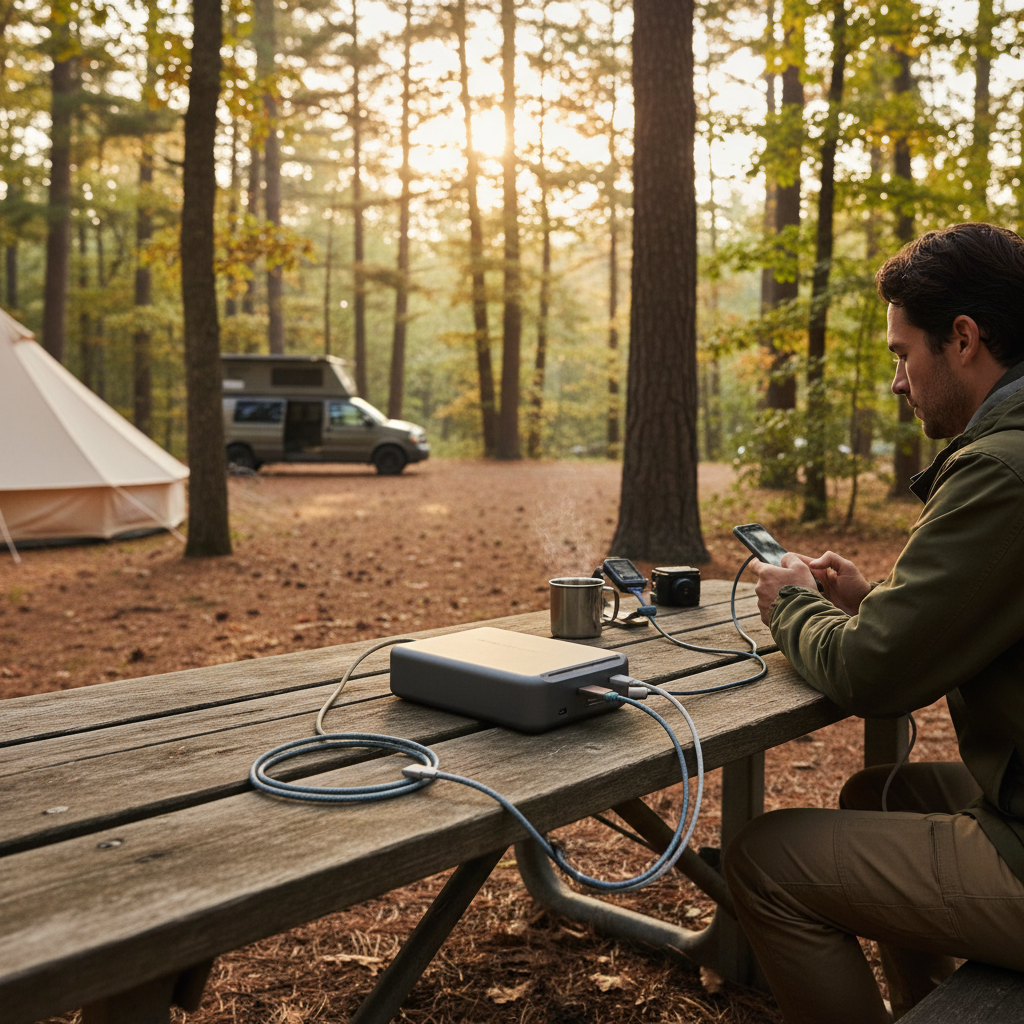
How to use a power bank on a trip (simple system that works)
Buying the right bank helps, but a small routine keeps you from waking up to dead devices.
- Pick “critical devices”: usually phone, headlamp, satellite messenger if you carry one.
- Charge during downtime: top up in late afternoon, not at 1 a.m. when it’s cold and annoying.
- Keep batteries warmer: at night, store the bank in a sleeping bag pocket or inside clothing, cold can reduce performance.
- Use airplane mode strategically: if you’re not expecting calls, this can stretch phone battery a lot.
- Label cables: sounds silly, but mixed USB-C and micro-USB ruins trips more often than people admit.
According to the National Park Service, trip planning includes preparing for changing conditions and limited services in many parks, which often means you can’t count on outlets when you want them.
Common mistakes (and what to do instead)
- Mistake: buying by mAh alone. Do instead: confirm USB-C PD wattage and your device requirements.
- Mistake: assuming solar panels will “solve it.” Do instead: treat solar as supplemental unless you’ve tested your setup in similar conditions.
- Mistake: leaving the bank in direct sun. Do instead: keep it shaded, heat can reduce lifespan and trigger thermal protection.
- Mistake: using random cheap cables. Do instead: pack one known-good cable per device type, plus one spare.
- Mistake: expecting a laptop to charge from any USB-C port. Do instead: check that the bank supports the needed PD profile and wattage.
When to consider a bigger solution (or ask for help)
If you’re powering medical devices, a CPAP, or mission-critical communication gear, a standard pocket power bank might not be enough. In those situations, it’s smart to talk with the device manufacturer or a qualified outfitter about power requirements and safe operating temperatures, because safety and reliability can change by device model and environment.
Also, if you’re consistently running out of power even with a 20,000 mAh pack, that’s usually a sign you need either higher efficiency habits (phone settings) or a different category like a small power station, especially for longer basecamps.
Conclusion: picking the right bank without overthinking it
The best power banks for camping usually fall into two winners: a lightweight 10,000–15,000 mAh USB-C PD pack for backpacking, or a 20,000 mAh USB-C PD pack for most weekend trips. If you bring a laptop, shift the decision toward higher watts and faster input charging.
If you want an easy next step, list your devices, count nights, then buy the smallest capacity that still gives you margin for cold and heavier-than-expected use, your back will thank you.
Key takeaways
- 20,000 mAh + USB-C PD is the most versatile camping combo.
- Watts matter for tablets and laptops, not just capacity.
- Cold and heat can reduce real-world performance, plan buffer.
- Recharge speed is a hidden quality-of-life feature.
FAQ
- How many mAh do I need for a 3-day camping trip?
Many people land around 20,000 mAh for a 2–3 night trip if they’re charging phones and a headlamp, but heavier navigation, photos, or poor signal can push needs higher. - Are higher-capacity power banks always better for camping?
Not always. Bigger packs weigh more and take longer to refill, so if you can recharge from a car or only need a couple charges, a smaller pack can feel more “best” in practice. - What should I look for to charge a laptop at camp?
Look for USB-C Power Delivery with enough wattage for your laptop, commonly 45W–65W or more, and use a cable rated for that wattage, otherwise charging can be slow or unstable. - Do rugged power banks really matter outdoors?
If you toss gear into a bin, hike with it, or expect wet conditions, tougher casing and protected ports help. For casual campground use, it’s still nice, just less critical. - Will a power bank work in freezing temperatures?
It usually works, but capacity and output can drop. Keeping it in an inner pocket or sleeping bag at night often helps maintain performance. - Is pass-through charging safe for camping setups?
Some models handle it well, others run hotter. If you plan to charge a bank while it charges devices, follow the manufacturer guidance and stop if you notice excessive heat. - Can I bring a large power bank on a flight to a camping destination?
Airline limits vary, and rules can change. Check your airline and FAA guidance before you fly, especially for 25,000–30,000 mAh class packs.
If you’re trying to choose between two models and the specs feel like alphabet soup, focus on your device list and the USB-C PD wattage first, then capacity second, that simple filter usually narrows the field fast without buyer’s remorse.